
Aging in Place: Room-by-Room Home Modifications That Help Prevent Falls
Aging in Place: Room-by-Room Home Modifications That Help Prevent Falls
For many older adults, staying in the home they know and love is about more than just comfort. It is about independence, familiarity, and being able to remain connected to their community. With a few well-chosen home modifications, many common fall hazards can be reduced without undertaking a major renovation.
This is especially important in Northern Michigan. Homes here face some challenges that are easy to overlook. Exterior steps, porches, and walkways can ice over repeatedly from October through April. Many Northern Michigan homes have a basement, often at the bottom of an open staircase. A home that feels perfectly safe in July can present very different risks in January.
The good news is that fall prevention does not necessarily require an expensive remodel. Some of the most effective changes are relatively inexpensive. Walking through the home one room at a time can help identify where a small modification could make a major difference.
Stairs: Give Every Step a Purpose and a Handhold
The entrance to a home is one of the first places to evaluate because it is often exposed to the weather. In Northern Michigan, exterior steps and porches may be wet, snow-covered, or icy for much of the colder months. During the winter, keeping exterior steps and walking surfaces clear of snow and ice is just as important as the permanent modifications. Ice melt, traction products and nonslip outdoor surfaces can supplement, not replace, good handrails and adequate lighting.
Address the Railing
A sturdy continuous handrail is one of most overlooked features. A continuous handrail that can be used from the bottom of the staircase to the top is an inexpensive improvement compared with the potential consequences of a fall. Someone should have something solid to hold onto while using the steps, rather than relying on a doorframe, a railing that is too low, or a nearby wall. If there are several steps, consider handrails on both sides.
Specific fix: Install or improve a continuous handrail.
Rough cost: $100–$800.
Brighten the Situation
Improving lighting can also make a substantial difference. Motion-activated lighting can illuminate steps when someone approaches the house without requiring them to find a switch in the dark.
Specific fix: Add motion-activated exterior lighting.
Rough cost: $50–$250.
Interior Staircase
Interior stairs deserve special attention because a fall on a staircase can be particularly serious. Look for loose carpeting, poor lighting, objects left on steps, or handrails that are difficult to grip.
Northern Michigan homes have another issue worth considering: the basement laundry room. In many homes, doing laundry means carrying baskets up and down an open staircase. That creates a combination of hazards: stairs, uneven loads, wet clothing, and divided attention.
If possible, reduce the number of trips up and down the stairs. A laundry basket that is lightweight and easy to carry can help, but a long-term solution might be relocating laundry equipment to the main floor if the home’s layout and budget allow. Another option is to install a laundry chute or dumbwaiter. A laundry chute won’t eliminate the need to visit the washer and dryer but may reduce the amount of trips needed. A dumbwaiter is essentially a elevator for smaller objects like a laundry basket. Dumbwaiters can be a simple pully mechanism up to a sophisticated electronic elevator.
Either one will help with transporting things between floors.
Specific fix: Laundry Chute or Dumbwaiter
Rough cost: $500+
A full laundry relocation can cost thousands of dollars, so it is usually not the first modification to consider. The goal is to address the highest-risk situations first.
Bathroom: The Highest-Priority Room for Fall Prevention
If you are going to prioritize only one room, start with the bathroom.
Bathrooms combine several risk factors: hard surfaces, water, narrow spaces, getting in and out of a shower or tub, and the need to sit down or stand up while the floor may be wet. Someone who is perfectly steady walking through a dry living room can be much less stable stepping out of a wet shower.
The good news is that some of the least expensive aging-in-place modifications can have an enormous impact in the bathroom.
Install Grab Bars
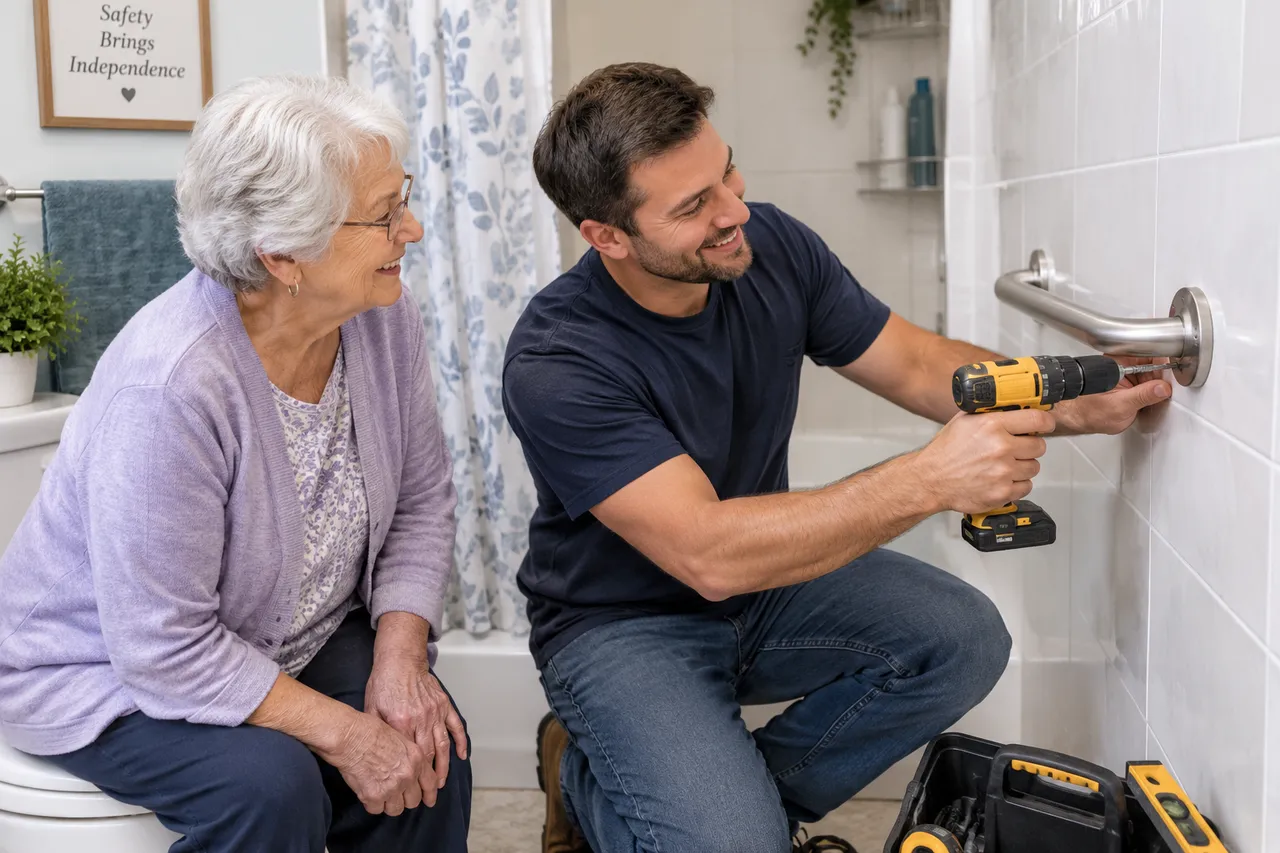
Grab bars are one of the first improvements to consider around a toilet and shower or tub.
Specific fix: Install properly anchored grab bars.
Rough cost: $50–$150 per bar and properly installed.
The important word is properly. A decorative towel bar is not a grab bar. Grab bars need to be securely attached to appropriate structural support or installed using a system specifically designed for the particular walls construction.
A bar near the entrance to a shower can provide something stable to hold while stepping over the threshold. A vertical or horizontal bar inside the shower can provide additional support. A grab bar near the toilet can make sitting down and standing up much easier.
These relatively inexpensive modifications can be far more practical than waiting until someone has a fall and then trying to redesign the entire bathroom for someone who now needs a wheelchair.
Add a Shower Chair
A shower chair is another remarkably simple intervention.
Specific fix: Add a stable, properly sized shower chair or transfer bench.
Rough cost: $150–$750.
Moving around on a wet surface for an extended period can increase the risk of losing balance, particularly for someone who becomes tired or unsteady. A shower chair allows the person to sit while bathing and reduces the need to stand continuously on a wet floor.
A shower chair is particularly useful when combined with a handheld showerhead.
Specific fix: Install a handheld showerhead that can be used while seated and moved to where it’s needed.
Rough cost: $30–$150.
Grab bars and a shower chair are often among the cheapest bathroom interventions with the greatest potential effect on fall risk. They should be considered before jumping into an expensive bathroom remodel.
Look at the Toilet
The toilet is another location where getting up and down can be difficult.
Specific fix: Install a raised toilet seat or an elevated toilet, and/or add a properly positioned grab bar.
Rough cost: $30–$200 for a just a raised seat or grab bar; $800+ for permanent modifications like an elevated toilet.
The right solution depends on the individual and the bathroom layout. The goal is to make sitting down and standing up controlled and safe, rather than requiring the person to pull themselves up using an unstable towel rack, sink, or other object.
Reduce Slippery Surfaces
Bath mats should have nonslip backing and should lie flat. Avoid loose rugs that can slide or curl at the edges.
Specific fix: Replace loose bathroom rugs with secure nonslip mats or eliminate unnecessary rugs.
Rough cost: $20–$60.
If a bathroom is undergoing a larger renovation, slip-resistant flooring and a curbless or low-threshold shower can provide additional accessibility. Just understand that these projects can quickly move into the thousands or tens of thousands of dollars.
That is why the basic interventions should come first. A $75 grab bar can address a problem that a $15,000 bathroom remodel might otherwise be used to solve.
Bedroom: Make the First and Last Steps of the Day Safer
Falls do not only happen while someone is walking around the house during the day. The transition from the bed to standing can be a vulnerable moment, especially when someone wakes up during the middle of the night.
Start with lighting.
Specific fix: Add a bedside lamp or motion-activated pathway lighting.
Rough cost: $20–$300.
The light switch should be reachable from the bedside if possible. A motion-activated night-light can illuminate the path between the bed and bathroom without requiring someone to walk through a dark room.
Keep the path clear. Shoes, clothing, phone chargers, and other clutter should not be left beside the bed where they can become tripping hazards.
Specific fix: Create a clear, unobstructed path from the bed to the bathroom.
Cost: $0.
A sturdy chair or bench can also provide a place to sit while getting dressed, particularly if standing on one leg to put on pants or shoes has become difficult.
Specific fix: Add a stable dressing chair or bench.
Rough cost: $50–$200.
Kitchen: Reduce Reaching, Climbing, and Carrying
The kitchen can contain several less-obvious fall hazards. Older adults may climb on chairs or stools to reach upper cabinets, carry hot food across the room, or stand on wet floors while cooking or doing dishes.
The simplest solution is to move frequently used items.
Specific fix: Store commonly used dishes, cookware, and food between waist and shoulder height.
Cost: $0–$100.
Avoid making someone climb onto a chair to reach a cabinet. If additional storage is needed, pull-out shelves or lower storage can make frequently used items easier to access. If higher access is required, many manufacturers make extremely stable step stools that can come in handy.
Specific fix: Install pull-out cabinet shelves or reorganize storage.
Rough cost: $50–$300 per cabinet, depending on the system.
Keep the floor clear and clean up spills promptly. A non-slip kitchen mat should be secure and lie completely flat.
If someone must carry hot food or dishes from the kitchen to another room, consider using a bus tub or maybe a cart designed for stable indoor movement. Another option is to try to just eat in the kitchen by adding a small table and chairs.
Hallways and Living Areas: Remove the Obstacles
The spaces between rooms are easy to overlook because they do not seem inherently dangerous. But loose rugs, electrical cords, clutter, and poorly placed furniture can turn an ordinary walkway into a fall hazard.
Specific fix: Remove loose throw rugs and secure cords away from walking paths.
Cost: $0–$100.
Furniture should leave enough room for comfortable passage. This becomes especially important if someone eventually needs a cane, walker, or other mobility aid. If an aid is needed make walkways even wider than normal.
Lighting should also be consistent throughout the home. A dark hallway between the bedroom and bathroom is a simple problem to solve with inexpensive night-lights.
Specific fix: Install plug-in or motion-activated night-lights along common night-time routes.
Rough cost: $10–$50.
Think About the Whole House, Not Just One Room
Aging in place is not necessarily about making a home look like a medical facility. The most successful modifications often blend into the existing house while quietly making everyday activities safer.
Start with the places where a person is most likely to lose balance: exterior steps, stairs, the bathroom, the bedroom-to-bathroom route, and areas where reaching or climbing is required.
In Northern Michigan, the seasonal factor deserves particular attention. A person who manages the front steps comfortably in August may face a completely different situation when the same steps are covered in snow or ice in January. Likewise, the basement staircase that seems routine can become an increasingly difficult part of a daily laundry routine.
The bathroom deserves special priority because it combines water, hard surfaces, and transfers in a confined space. Grab bars and a shower chair are two of the most affordable changes to consider, and they can be implemented without completely remodeling the room.
The best approach is to walk through the home with the older adult and look at what they actually do, not simply what the floor plan says they should be able to do. Watch how they enter the house, climb the stairs, get into the shower, stand from the toilet, get out of bed, and reach for items in the kitchen.
Then address the highest-risk activities first.
Aging in place does not have to mean waiting for a fall and then making emergency changes. A few relatively inexpensive modifications today can help an older adult continue using the home they know, while preserving independence, and reducing unnecessary hazards along the way.